Life rarely follows a straight path, and for those managing both a professional career and personal assets, a single event can feel like a falling domino. When a crisis hits, whether it involves a legal dispute, a financial downturn, or a blow to one’s reputation, the pressure can be overwhelming. The key to surviving these high-stakes moments is not just resilience, but a structured approach to problem-solving. This manual explores how professionals and business owners can navigate the intersections of law, finance, and public perception to protect what they have spent years building.
Stability is never guaranteed. A person might wake up as a successful entrepreneur and go to bed facing a legal challenge that threatens their entire future. These situations require a level head and a multi-disciplinary strategy. It is not enough to fix one problem; a person must look at how a crisis in one area affects their business holdings, their real estate, and their long-term debt obligations. By understanding the tools available and the specific roles of various legal professionals, an individual can move from a state of panic to a state of strategic action.
The Immediate Impact of Reputation Crises
When a person faces a serious allegation, the fallout is often immediate and multifaceted. Beyond the courtroom, there is the court of public opinion, which can be far more damaging to a professional’s livelihood. For instance, if an individual is confronted with a sex crime accusation, the social and professional consequences begin long before a judge ever hears the case. Such an event can lead to the immediate suspension of professional licenses, the freezing of business partnerships, and a sudden drop in revenue.
Navigating this requires more than just a criminal defense; it requires a reputation management plan. The focus must be on containing the narrative while ensuring that the individual’s constitutional rights are protected. Because these situations are so sensitive, the strategy must be quiet and methodical. Every public statement or business move must be calculated to prevent further inflammatory responses. It is about protecting the core of one’s identity while the legal system works through the facts of the matter.
Protecting Corporate Interests and Governance

While a personal crisis unfolds, the business entity itself remains a separate concern that requires its own set of guardians. Corporate structures are designed to provide a layer of protection, but that shield is only as strong as the governing documents that support it. This is where business law attorneys become essential. These professionals help ensure that the company can continue to operate even when a key stakeholder is incapacitated or embroiled in a personal legal battle.
They look at partnership agreements, morality clauses, and succession plans. If a crisis threatens to trigger a buyout or a forced dissolution, these lawyers work to find a path that preserves the value of the company. They also handle the intricate details of contract negotiations and employment disputes that might arise as a result of the primary crisis. Their role is to keep the gears of commerce turning while the individual focuses on their external legal battles, ensuring that a temporary setback does not become a permanent business failure.
Navigating Workplace Safety and Liability
In many cases, the financial strain on a business owner or a professional stems from physical risks and the high cost of maintaining a safe environment. Accidents happen, and when they do, they trigger a complex web of regulatory and financial obligations. Understanding workers compensation law is a fundamental part of managing a business’s long-term health. This area of the law ensures that employees are cared for after an injury while providing the employer with a degree of immunity from certain types of lawsuits.
However, if a business fails to maintain the proper insurance or if a claim is handled poorly, the financial consequences can be catastrophic. The costs of medical care and lost wages can quickly drain a company’s reserves. Professional management of these claims involves staying compliant with state statutes and ensuring that every incident is documented with precision. It is about balancing the human element of caring for a team with the cold reality of managing a balance sheet during a time of high stress and limited resources.
Managing Civil Claims and Personal Liability
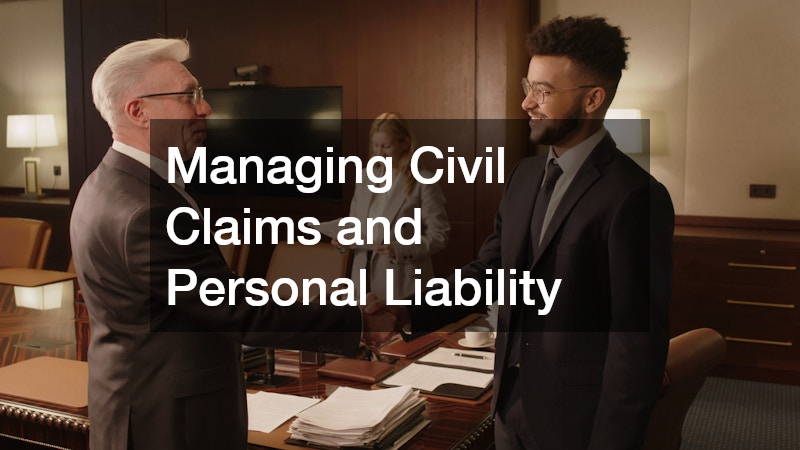
Sometimes, the crisis is not internal to the business but comes from a third party seeking damages. Civil litigation can arise from a wide range of incidents, from a simple slip-and-fall to a complex professional malpractice claim. In these instances, the individual on the receiving end of the lawsuit must understand the perspective of the opposing side. A personal injury attorney will be looking for any evidence of negligence or failure in duty to secure a settlement for their client.
For the person defending against such a claim, the goal is to limit exposure. This often involves working closely with insurance carriers and ensuring that personal assets are not at risk. If a judgment is entered, it can lead to liens against property or the garnishment of future earnings. Preventing this requires an early and aggressive defense that focuses on the facts of the case. By addressing these civil concerns early, a professional can prevent a single accident from spiraling into a total financial collapse that threatens their home and their business.
Real Estate Security and Property Transfers
During a legal or financial crisis, real estate is often the most significant asset on the table. Whether it is a family home or a commercial office building, property represents stability. However, transferring property or using it as collateral during a period of litigation can be incredibly difficult. This is where title companies play a vital role in the process. They are the gatekeepers who ensure that a property can be sold or refinanced without the interference of surprise liens or legal disputes.
When a crisis hits, the status of a property title can change overnight. A judgment from a lawsuit or a tax lien can attach to the property, making it nearly impossible to move. These companies provide the insurance and the verification needed to prove that a transaction is legitimate. For an individual trying to liquidate assets to pay for a legal defense or to settle a debt, the efficiency of these organizations is paramount. They provide the certainty that lenders and buyers require before they will commit to a deal.
Detailed Asset Verification and Due Diligence

Before a property can be cleared for sale or used to secure a loan, a deep dive into its history is required. This process is highly technical and requires a keen eye for detail. A title examiner is the professional tasked with looking through public records, deeds, and court filings to find any potential issues. They look for errors in previous transfers, undisclosed heirs, or lingering debts that might not be immediately obvious to the property owner.
In a high-stakes crisis, this level of due diligence is a form of asset protection. If a person knows exactly what is on their record, they can take steps to clear those issues before they become a problem in a high-pressure negotiation. This professional’s work ensures that when a person says they own a piece of land or a building, that claim is backed by an indisputable paper trail. It is a necessary step in maintaining the integrity of one’s net worth when every dollar is being scrutinized by creditors or the court.
The Path of Judicial Review and Correction
The legal system is not perfect, and sometimes a trial court makes a decision that is fundamentally flawed. When this happens, the individual must look toward the higher courts for relief. This is not a simple task of re-trying the case; it is a technical challenge that focuses on procedural errors and the misapplication of the law. An appeals lawyer is a specialist who understands how to navigate this rigorous process. They do not look for new evidence, but rather for mistakes in the way the original trial was conducted.
For a business owner or a professional who has been hit with an unfair judgment, the appellate process is the final line of defense. It can take months or even years, but a successful appeal can overturn a massive financial penalty or restore a professional reputation. This stage of litigation requires a high degree of patience and a different set of skills than those used in a standard courtroom. It is a battle of briefs and oral arguments that can change the trajectory of a person’s entire legal journey.
Strategic Solutions for Overwhelming Debt
If the combination of legal fees, lost income, and judgments becomes too much to bear, the conversation must turn toward debt relief. There is often a stigma associated with insolvency, but in the professional world, it is often a strategic tool used to hit the reset button. A bankruptcy attorney is a professional who helps individuals and businesses understand their options for discharging or reorganizing their debts. They provide a shield against creditors and a structured path toward financial stability.
The goal is to stop the bleeding. When a person files for protection, an automatic stay goes into effect, preventing creditors from taking further collection actions. This gives the individual breathing room to assess their situation and decide on the best way forward. Whether the goal is to liquidate assets to pay off what is owed or to create a plan to pay creditors over time, this professional guidance is the difference between a total loss and a manageable recovery. It is about taking control of a chaotic financial situation.
Restructuring for the Long Term

For many professionals, a total liquidation is not the best option because they have a steady income and assets they wish to keep, such as a home or a business. In these cases, a more structured approach is needed. Working with a Chapter 13 bankruptcy attorney allows an individual to create a three-to-five-year plan to pay back a portion of their debts. This process is often preferred by those who have fallen behind on mortgage payments or who have tax debts that cannot be fully discharged.
This specific type of filing allows for the “cramdown” of certain debts and the opportunity to save a home from foreclosure. It requires a detailed accounting of all income and expenses, and the plan must be approved by a trustee. For someone who has faced a temporary crisis, such as a sudden legal bill or a short-term loss of a client base, this reorganization provides a clear light at the end of the tunnel. It is a demanding process, but it preserves the foundation of a person’s financial life while they work through their challenges.
The Value of Specialized Community Insight
While national firms offer broad resources, there is a distinct advantage to working with someone who understands the local landscape. Every jurisdiction has its own quirks, and the relationship between the court and the legal community can vary significantly from one city to the next. Finding a local bankruptcy attorney can be a game-changer for someone in a crisis. These professionals know the specific tendencies of the local trustees and how the regional courts interpret the law, which can lead to a smoother and more predictable outcome.
A local expert can offer insights that a remote firm might miss, such as how local property values are being assessed or which mediation programs are most effective in the area. They are often more accessible for face-to-face meetings, which can provide much-needed peace of mind during a stressful time. By choosing someone with roots in the community, an individual ensures that their case is handled with an understanding of the local economic and legal environment. This personal touch is often what makes a difficult process feel human and manageable.
Ultimately, managing a high-stakes crisis is about assembling the right team and taking a holistic view of the problem. A professional’s reputation, business, and assets are all linked. When one area is threatened, the others must be fortified. By moving methodically through the legal and financial options available, from protecting a title to restructuring debt, it is possible to emerge from a crisis with one’s future intact. The path to recovery is rarely easy, but with a clear manual and the right support, it is always attainable. Resilience is not just about enduring the storm; it is about learning how to navigate the waters so that you can reach a stable shore. Through careful planning and a commitment to resolving each issue one step at a time, any professional can find their way back to solid ground.